
Here’s the uncomfortable truth the wellness industry doesn’t want you to hear: you already know how to be healthy. Eat more vegetables. Move your body. Sleep enough. Don’t smoke. Drink less alcohol.
You don’t need a $200 supplement stack. You don’t need a celebrity meal plan. You don’t need to eliminate an entire macronutrient group because a podcast host told you to.
What you need is to understand why these basics work — at the cellular level — so you can stop falling for the next miracle trend and start building habits that actually last. That’s what this guide does. No fads. No guilt. Just the science, translated into decisions you can make at your next meal.

The Calorie Equation: What Actually Drives Weight Loss
Every diet that has ever worked — keto, vegan, paleo, intermittent fasting, Weight Watchers, carnivore — worked for one reason: it created a caloric deficit. You consumed fewer calories than your body burned. That’s it.
This isn’t opinion. It’s thermodynamics. Your body cannot manufacture fat tissue from nothing. It needs surplus energy. Remove the surplus, and stored fat gets mobilized for fuel.
The reason diets fail isn’t because the science is wrong. It’s because the deficit is either too aggressive (your body rebels) or too boring (your willpower collapses). A sustainable deficit looks like this:
- Mild deficit (300-500 calories/day): Lose roughly 0.5-1 lb per week. Muscle preserved. Energy stable. Sustainable for months.
- Aggressive deficit (700-1000+ calories/day): Faster initial loss — but muscle wasting, hormonal disruption, constant hunger, and near-certain rebound. This is crash dieting.
A body weight planner from the NIH can estimate your total daily energy expenditure (TDEE) based on your stats. Subtract 300-500 calories from that number. That’s your target. No food group eliminated. No meals skipped. Just math.
The Metabolism Myth (And What Really Slows It Down)
“I have a slow metabolism.” You probably don’t.
A landmark 2021 study published in Science — analyzing over 6,400 people across 29 countries — found that metabolic rate is remarkably consistent across individuals when adjusted for body size and composition. The variation between people of similar size is only about 200-300 calories. That’s one large banana.
What does slow your metabolism is crash dieting itself. When you cut calories drastically, your body activates a survival mechanism called adaptive thermogenesis — it reduces energy expenditure to conserve fuel. You move less without realizing it (fewer fidgets, shorter steps, less gesturing). Your workout burns fewer calories. Your body temperature drops slightly.
This is why contestants on extreme weight loss shows regain the weight. Their metabolisms remain suppressed years later. The lesson: moderate deficits protect your metabolic rate. Extreme deficits damage it.
Protein: The Most Underrated Nutrient for Weight Loss
If there’s one nutritional change that produces outsized results, it’s this: eat more protein.
Here’s why protein is uniquely powerful:
Thermic effect. Your body burns 20-30% of protein calories just digesting them. Eat 100 calories of chicken breast, and 25 of those calories are spent on digestion alone. Compare that to fat (0-3%) and carbs (5-10%). Protein is metabolically expensive — in your favor.
Satiety. Protein is the most filling macronutrient. It suppresses ghrelin (the hunger hormone) and stimulates peptide YY (the fullness signal). People who increase protein intake to 30% of calories spontaneously eat 400+ fewer calories per day without trying — because they simply aren’t as hungry.
Muscle preservation. During a caloric deficit, your body doesn’t just burn fat. It cannibalizes muscle too. Adequate protein — combined with resistance training — dramatically reduces muscle loss, ensuring that the weight you lose is predominantly fat.
How much? Aim for 0.7-1.0 grams per pound of body weight daily. A 170-pound person should target 120-170g of protein. Spread it across 3-4 meals for optimal absorption.
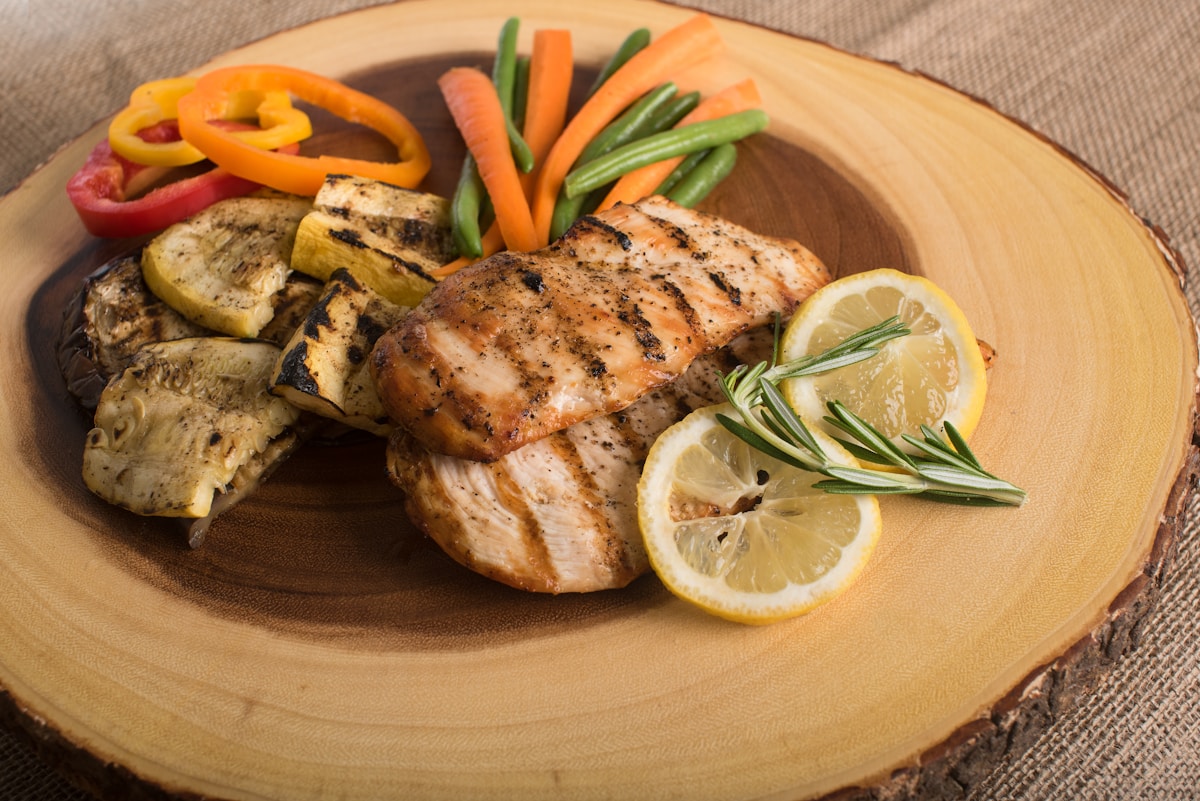
Fat Doesn’t Make You Fat — Here’s What Does
The low-fat craze of the 1990s was one of the most damaging public health mistakes in modern history. Food manufacturers replaced fat with sugar and refined carbohydrates to maintain flavor. Obesity rates skyrocketed.
Dietary fat does not automatically become body fat. Excess calories from any source do. And fat is essential:
- It’s required for producing testosterone, estrogen, and other hormones
- Your brain is roughly 60% fat by dry weight — it needs dietary fat to function
- Vitamins A, D, E, and K are fat-soluble — without dietary fat, you can’t absorb them
- Fat slows gastric emptying, keeping you full longer after meals
The key distinction is type. The Harvard School of Public Health summarizes it cleanly: prioritize unsaturated fats (olive oil, avocados, nuts, fatty fish) and minimize trans fats and highly processed seed oils. Saturated fat from whole food sources (eggs, dairy, meat) is fine in moderate amounts for most people.
The Carb Debate: Settled by Science
Keto advocates say carbs are poison. Vegan advocates say carbs are life. The research says: it depends on the carb.
Multiple meta-analyses comparing low-carb and low-fat diets at equal calorie levels show virtually identical fat loss over 12 months. The macronutrient split matters far less than total calories and food quality.
What matters is the source:
- Whole carbs (sweet potatoes, oats, beans, fruits, quinoa): packed with fiber, micronutrients, and slow-releasing energy. These support gut health, stable blood sugar, and sustained energy.
- Refined carbs (white bread, pastries, sugary cereals, soda): stripped of fiber, rapidly absorbed, spike insulin, and leave you hungry 90 minutes later. These drive overconsumption.
You don’t need to cut carbs. You need to upgrade them. A person eating 250g of carbs daily from whole food sources will be healthier and leaner than someone eating 100g from processed junk.
Your Gut: The Organ You’re Probably Ignoring
The human gut contains roughly 38 trillion bacteria — more microbial cells than human cells. This ecosystem, called the gut microbiome, influences far more than digestion. It affects immunity, inflammation, mood, and — increasingly — body weight.
Research from the Nature microbiome research collection shows that lean individuals tend to have greater microbial diversity than obese individuals. When gut bacteria from lean mice are transplanted into obese mice, the obese mice lose weight — without any change in diet.
What feeds a healthy microbiome?
- Fiber. Aim for 25-35g daily from vegetables, legumes, and whole grains. Most adults get less than 15g.
- Fermented foods. Yogurt, kefir, sauerkraut, kimchi, and miso introduce beneficial bacteria directly.
- Polyphenols. Found in berries, dark chocolate, green tea, and coffee. These compounds selectively feed beneficial gut bacteria.
What damages it? Chronic stress, poor sleep, excessive alcohol, artificial sweeteners, and — ironically — unnecessarily restrictive diets that eliminate entire food groups and reduce microbial diversity.
Sleep: The Free Weight Loss Drug Nobody Takes
This section might be the most important in the entire article.
A study from the University of Chicago placed dieters on the same caloric deficit under two conditions: 8.5 hours of sleep vs. 5.5 hours. Same food. Same calories. Same people.
The results were staggering. The sleep-restricted group lost 55% less body fat and lost significantly more muscle mass than the well-rested group. Identical diets. Radically different outcomes — determined entirely by sleep.
Here’s the mechanism: sleep deprivation increases ghrelin (hunger) by up to 15%, decreases leptin (fullness), impairs insulin sensitivity, elevates cortisol, and reduces prefrontal cortex activity — the part of your brain responsible for impulse control. You are literally hungrier, less satisfied, hormonally disrupted, and less capable of resisting cravings. All from one bad night.
The prescription: 7-9 hours per night. Non-negotiable. If you’re dieting perfectly but sleeping 5 hours, you are undermining your own results. Fix the sleep before you optimize the macros.

The Practical Framework: What to Actually Eat
Enough theory. Here’s a framework you can use at your next meal — no calorie counting required for most people.
The Plate Method
At every meal, build your plate like this:
- Half the plate: vegetables or fruit. Any kind. Raw, cooked, roasted — it doesn’t matter. Volume and fiber without excessive calories.
- Quarter of the plate: protein. Chicken, fish, eggs, beans, tofu, Greek yogurt, cottage cheese — whatever you enjoy and will eat consistently.
- Quarter of the plate: whole carbs. Rice, sweet potato, oats, whole grain bread, quinoa.
- A thumb-sized portion of healthy fat. Olive oil drizzle, half an avocado, a handful of nuts.
This isn’t a “diet.” It’s a template. It automatically controls calories through volume (vegetables), controls hunger through protein and fat, and provides sustained energy through whole carbs. No foods are banned. No meals are skipped.
The 80/20 Principle
Eat whole, minimally processed foods 80% of the time. The remaining 20%? Pizza, ice cream, chocolate — whatever you love. Restriction breeds obsession. Including foods you enjoy prevents the binge-restrict cycle that derails most diets.
A nutrition plan you follow 80% for 12 months will always beat a “perfect” plan you abandon after 3 weeks.
Supplements: Saving You From Wasting Money
The supplement industry generates over $50 billion annually in the U.S. with minimal FDA oversight on efficacy claims. Here’s what the clinical evidence actually supports:
Worth taking (if deficient): Vitamin D (most adults in northern latitudes are deficient), Omega-3 fish oil (if you don’t eat fatty fish twice per week), Magnesium (commonly under-consumed — supports sleep and recovery).
Modestly useful: Creatine monohydrate (well-researched for muscle and brain function — not just for athletes), Caffeine (genuine but small metabolic boost — you already get this from coffee).
Save your money: Garcinia cambogia, raspberry ketones, green coffee bean extract, “fat burners,” detox teas, collagen for weight loss, apple cider vinegar pills. Controlled trials show negligible or zero effect for all of these.
Spend your supplement budget on higher quality whole foods instead. A $50/month grocery upgrade produces results that no supplement can match.
Movement: The Minimum Effective Dose
Exercise is essential for health. It is a mediocre tool for weight loss. This matters because people overestimate exercise calories and underestimate food calories — then reward themselves with a 600-calorie smoothie after burning 250 calories on the treadmill.
For health: The WHO recommends 150-300 minutes of moderate activity per week (brisk walking counts) plus 2 sessions of resistance training. Meeting this baseline reduces all-cause mortality by roughly 30%.
For weight loss: Resistance training (weights, bodyweight exercises, resistance bands) preserves muscle during a caloric deficit — which maintains your metabolic rate. Walking is the most underrated fat loss tool: it burns calories without spiking hunger or cortisol the way intense cardio does. A daily 30-minute walk burns roughly 150 calories — that’s over 15 lbs of fat per year if everything else stays constant.
For sustainability: The best exercise is the one you’ll actually do. Hate running? Don’t run. Love swimming, dancing, hiking, or pickleball? Do that. Consistency over intensity, always.
The Bottom Line
Healthy living is not a 30-day challenge. It’s not a product you buy. It’s a collection of boring, repeatable habits that compound over months and years — just like investing.
Eat enough protein. Fill half your plate with vegetables. Sleep 7-9 hours. Walk daily. Lift something heavy twice a week. Drink water. Eat foods you enjoy without guilt. And stop giving money to people who promise shortcuts that don’t exist.
The wellness industry profits from your confusion. Clarity is free.
Frequently Asked Questions
How many calories do I actually need to lose weight?
Weight loss requires a caloric deficit — consuming fewer calories than your body burns. A safe and sustainable deficit is 300 to 500 calories below your total daily energy expenditure (TDEE). For most adults, this translates to roughly 1,500 to 2,200 calories daily depending on sex, age, height, weight, and activity level. Deficits larger than 500 calories per day often backfire — they trigger adaptive thermogenesis where your metabolism slows down to conserve energy, and they increase the likelihood of muscle loss and binge eating. Slow, consistent deficits produce permanent results. Crash diets produce temporary results followed by rebound weight gain.
Is it true that eating fat makes you fat?
No. This is one of the most damaging nutrition myths of the past 50 years. Dietary fat does not automatically become body fat — excess calories from any source do. Healthy fats from olive oil, avocados, nuts, and fatty fish are essential for hormone production, brain function, and the absorption of vitamins A, D, E, and K. The low-fat craze of the 1990s replaced fat with sugar and refined carbohydrates, which contributed to rising obesity rates. A Mediterranean-style diet rich in healthy fats consistently outperforms low-fat diets in long-term weight management and cardiovascular health outcomes across multiple large-scale studies.
How much protein do I need per day?
For general health, aim for 0.7 to 1.0 grams of protein per pound of body weight daily. A 170-pound person should target 120 to 170 grams. If you are actively trying to lose weight while preserving muscle, the higher end of that range becomes important because protein protects lean mass during caloric deficits. Protein also has the highest thermic effect of any macronutrient — your body burns 20 to 30 percent of protein calories just digesting them, compared to 5 to 10 percent for carbs and 0 to 3 percent for fat. This makes high-protein diets inherently more forgiving from a caloric standpoint.
Do I need to cut carbs to lose weight?
No. You need to be in a caloric deficit to lose weight — the macronutrient composition is secondary. Low-carb diets like keto produce rapid initial weight loss primarily through water loss as glycogen stores deplete, not accelerated fat burning. Multiple meta-analyses comparing low-carb and low-fat diets at equal calorie levels show virtually identical fat loss over 12 months. The best diet is the one you can maintain long-term. If you love bread and pasta, a moderate-carb approach in a slight caloric deficit will outperform a strict keto diet you abandon after 6 weeks.
Why is sleep so important for weight loss?
Sleep deprivation is a silent saboteur of weight loss. When you sleep fewer than 6 hours per night, your body increases production of ghrelin — the hunger hormone — by up to 15 percent and decreases leptin — the satiety hormone — making you hungrier and less satisfied after meals. A University of Chicago study found that sleep-restricted dieters lost 55 percent less body fat than well-rested dieters eating the exact same calories. Poor sleep also impairs insulin sensitivity, increases cortisol, and reduces willpower — making you more likely to reach for high-calorie comfort foods. Prioritizing 7 to 9 hours of quality sleep may be the single most underrated weight loss intervention.
Are weight loss supplements worth buying?
The vast majority are not. The supplement industry generates over $50 billion annually in the U.S. alone with minimal FDA oversight on efficacy claims. Most popular weight loss supplements — garcinia cambogia, raspberry ketones, green coffee bean extract — have shown negligible or zero effect in controlled clinical trials. The few compounds with modest evidence — caffeine and green tea extract — provide effects so small (burning an extra 50 to 100 calories per day) that they are meaningless without proper nutrition and exercise. Save your money. Spend it on quality whole foods instead.
Last updated: January 2025. Nutrition science evolves — always verify health claims with peer-reviewed sources. This article does not constitute medical advice. Consult a healthcare professional before making significant dietary changes.