
Disclaimer: This article is for educational purposes only — not financial advice. All investments carry risk, including total loss of principal. Crypto is especially volatile. Consult a qualified financial advisor before making investment decisions.
Let’s be brutally honest for a moment: The financial advice your parents gave you (“Save 10% of your salary, buy a house, retire at 60”) isn’t wrong, but it is woefully incomplete for the world we live in today. In 2026, money moves at the speed of light. You can spend $1,000 with a face scan while lying in bed, and you can lose your life savings to a phishing email while waiting for your coffee.
Building wealth in a digital world requires a new operating system. It’s not just about math anymore; it’s about psychology, technology, and mastering the “Invisible Money” economy. We are no longer stacking gold bars; we are managing bits and bytes. If you don’t control the algorithm, the algorithm will control your bank account.
This guide is your blueprint. It is comprehensive, human, and devoid of the fluff that usually clogs financial blogs. We are going to break down exactly how to navigate this landscape — starting with the foundation: the psychology of digital money.

Phase 1: Escaping the “Frictionless” Spending Trap
The greatest enemy of wealth in the modern era is “Convenience.”
Tech companies have spent billions of dollars to remove friction from spending. Remember when you had to go to the ATM, count cash, and physically hand it over? That pain of parting with money was a psychological brake. It made you think.
Today, with Apple Pay, one-click checkout, and subscription models, that pain is gone. Spending feels like nothing. It feels like unlocking a phone. This is why you feel broke even if you earn a good salary. You are bleeding money through a thousand invisible cuts.
The Counter-Strategy: Re-Introducing Friction
To build wealth, you must artificially re-introduce friction into your life. Here is the protocol:
- The 24-Hour Rule for Digital Carts: If you add something to an online cart, you are strictly forbidden from checking out for 24 hours. You will be amazed at how often the urge to buy vanishes by the next morning.
- Delete Payment Details: Remove your saved credit card numbers from your browser and apps. Force yourself to get up, find your wallet, and type the 16 digits manually. That 60 seconds of effort is often enough to wake up your rational brain.
- Audit the “Vampire” Subscriptions: In 2026, we don’t buy things; we subscribe to them. Review your bank statement. You are likely paying for streaming services, apps, and cloud storage you haven’t used in months. Kill them mercilessly.
Phase 2: The “Autopilot” Infrastructure
Willpower is a limited resource. If you rely on “discipline” to save money every month, you will fail. You will have a bad day, you will be tired, and you will spend the money. The only way to win is to remove the human element (YOU) from the equation.
We call this “Paying Yourself First” via automation.
Most people do this: Income → Bills → Spending → Save what is left. (Spoiler: Nothing is ever left).
Wealthy people do this: Income → Investments/Savings → Bills → Spend what is left.
Designing Your Digital Cash Flow System
You need a system that runs while you sleep:
- The Hub Account: Your salary hits your main checking account. Do not let it sit there.
- The Automatic Transfer (Day 1): Set up an auto-transfer for the same day your salary arrives. Move 20% (or whatever you can afford) to a separate account at a DIFFERENT bank. Why a different bank? So you don’t see the balance every time you log in to buy groceries. Out of sight, out of mind.
- The Bill Pay Layer: Automate all fixed costs (rent, utilities, internet).
- The Guilt-Free Zone: Whatever is left in the main account is yours to spend. You can buy the expensive latte or the new shoes without guilt because you know your savings and bills are already handled.
For a detailed guide on building this system, see our Personal Finance Automation guide.
Phase 3: The “Freedom Fund” (Not an Emergency Fund)
I hate the term “Emergency Fund.” It sounds negative. It implies you are saving for a disaster. Words matter. Let’s rename it the Freedom Fund.
This fund is not just for when your car breaks down. It is for when your boss becomes toxic and you want to quit. It is for when a once-in-a-lifetime investment opportunity appears. It is “F-You Money.”
The Digital Safety Net Rules
- Liquidity is King: This money must be accessible instantly. A high-yield savings account (HYSA) is the only place for this. In 2026, digital banks offer 4-5% APY. Do not leave this cash in a standard checking account earning 0%. Make your idle money work.
- 3 to 6 Months: Calculate your bare-bones survival number (Rent + Food + Utilities) and multiply by 3. This is your first financial milestone. Before you buy crypto, before you buy stocks, you fill the Freedom Fund.
- The Psychological Armor: When you have 6 months of expenses in the bank, you walk differently. You negotiate better at work. You don’t make desperate decisions. Financial anxiety drops, and your IQ literally increases (stress makes us stupid).

Phase 4: Crushing the “Algorithmic Debt”
In the digital world, debt has been rebranded. It’s no longer called “Loan Sharking”; it’s called “Buy Now, Pay Later” (BNPL). Services like Tabby, Tamara, Afterpay, and Klarna are dangerous tools if misused. They slice a purchase into 4 small payments, tricking your brain into thinking you can afford things you can’t.
“It’s only $50 today!” No, it is a $200 debt that you are dragging into your future.
If you are currently in debt, you are swimming with weights on. You cannot build wealth while paying 20% interest on a credit card.
The Avalanche vs. Snowball (Digital Edition)
To kill debt, pick one of two strategies:
- The Snowball (Psychological Win): List debts from smallest balance to largest. Pay off the smallest one aggressively while paying minimums on the rest. When the small one dies, you get a dopamine hit. Roll that payment into the next one. This builds momentum.
- The Avalanche (Mathematical Win): List debts from highest interest rate to lowest. Attack the highest interest rate first. This saves you the most money in the long run but requires more patience.
The Golden Rule: While paying off debt, you must stop the bleeding. Cut up the cards. Delete the BNPL apps. You cannot bail out a boat if you are still drilling holes in the bottom.
Phase 5: The Growth Engine — Turning Cash into Wealth
Saving money is noble, but in 2026, saving alone is a losing strategy. Why? Because of inflation. Inflation is the silent tax that eats your money while it sleeps. If you bury $10,000 in your backyard today, it might only buy $7,000 worth of groceries in ten years. To build real wealth, your money must move. It must earn more than the inflation rate.
Welcome to the world of investing. In the past, investing was for rich people in suits who called brokers. Today, you can own a piece of the global economy while waiting for the bus, using nothing but your thumb. But with great access comes great noise.
The Golden Strategy: Dollar-Cost Averaging (DCA)
The biggest question beginners ask is: “Is now a good time to buy?”
The honest answer is: Nobody knows. Not the experts on TV, not the AI bots, and certainly not your cousin. Trying to “time the market” — buying low and selling high — is gambling. Most professionals fail at it.
The solution is Dollar-Cost Averaging (DCA). Instead of waiting for the “perfect moment,” you invest a fixed amount at regular intervals (e.g., $500 on the 1st of every month), regardless of whether the market is up or down.
- When the market is down: Your $500 buys more shares (you are buying on sale).
- When the market is up: Your portfolio value increases.
DCA removes the emotion. You stop checking the news. You stop panicking. You just keep buying. Over 10, 20, or 30 years, this is the most reliable way to build wealth. For a deeper dive, see our Beginner’s Guide to Investing in Stocks.
Phase 6: The “Boring” Portfolio (ETFs & Index Funds)
In the digital age, we are addicted to excitement. We want the crypto coin that goes up 1000% overnight. But in investing, Boring is Beautiful. Exciting investments usually lead to exciting losses.
The foundation of your wealth should be Exchange-Traded Funds (ETFs). An ETF is like a basket that holds hundreds or thousands of stocks. Instead of trying to pick the “winning needle” in the haystack, you just buy the whole haystack.
- S&P 500 ETF: You own a tiny slice of the 500 biggest companies in America (Apple, Microsoft, Google, etc.). If the economy grows, you grow.
- Total World Stock ETF: You own a slice of the entire global economy.
This provides diversification instantly. If one company goes bankrupt, you don’t care, because you own 499 others. In 2026, robo-advisors like Betterment or Wealthfront can build and rebalance this portfolio for you automatically for around 0.25% annually. You answer a few questions about your risk tolerance, and the algorithm does the rest.
Phase 7: The Democratization of Assets (Fractional Ownership)
One of the coolest innovations of our time is fractional investing.
Ten years ago, to invest in real estate, you needed $50,000 for a down payment. To buy a share of Amazon, you needed thousands. Today, you can buy $50 worth of a skyscraper.
Apps now let you pool your money with other investors to own high-value assets. You can own a fraction of a rental property and receive your share of the rent deposited into your app every month. For more on real estate investing without becoming a landlord, see our guide on Top REITs for Small Investors.
The Crypto Question: The “Hot Sauce” Rule
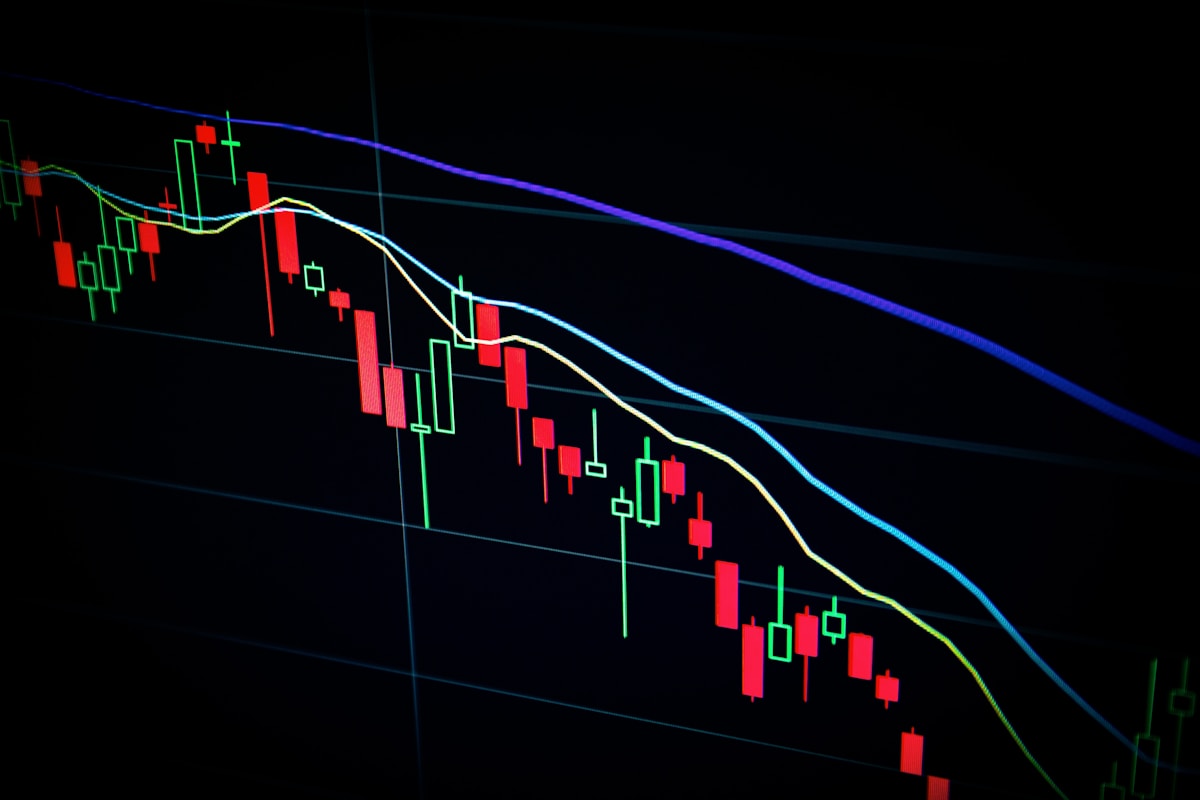
We cannot talk about digital wealth without mentioning cryptocurrency. Is it the future of money? Maybe. Is it a volatile rollercoaster? Definitely.
Treat crypto like hot sauce. A little bit adds flavor and excitement to your meal. Too much ruins it.
The 5% Rule: Never put more than 5% of your total net worth into speculative assets like crypto. If Bitcoin goes to the moon, your 5% will make you rich enough. If it goes to zero, you only lost 5% and your life is not ruined. This is asymmetric risk management.
Phase 8: Protecting the Digital Fortress
You have automated your savings, you are investing in ETFs, and you are building wealth. Now, you must protect it. In the digital world, you are not guarding against bank robbers with masks; you are guarding against hackers and data leaks.
The Wealth Protection Protocol:
- 2FA is Non-Negotiable: Enable Two-Factor Authentication on every single financial app. Use an Authenticator App (like Google or Microsoft Authenticator), NOT SMS text messages (which can be intercepted via SIM-swapping).
- The Password Manager: If you use the same password for your email and your bank, you are asking for trouble. Use a password manager to generate impossible-to-guess passwords for every account.
- The “Beneficiary” Check: What happens to your digital assets if you die tomorrow? Does your spouse or family know how to access your crypto wallet or your brokerage account? Create a “Digital Will” or a secure instruction manual stored in a physical safe. Billions of dollars in crypto are lost forever because the owner died without sharing the private keys.
Phase 9: The Ultimate Asset — Investing in Human Capital
We have talked about stocks, crypto, and real estate. But the asset with the highest potential Return on Investment (ROI) is looking back at you in the mirror. In 2026, your earning power is your greatest wealth engine.
You can scrimp and save on lattes all you want, but there is a limit to how much you can cut expenses. There is no limit to how much you can increase your income.
In the Age of AI, the workforce is bifurcating. There are those who are replaced by algorithms, and those who leverage algorithms to do the work of ten people.
The Strategy: Stop asking “How can I save $10?” and start asking “How can I earn $10,000?”
- Skill Stacking: Learn two unrelated skills and combine them. (e.g., Accounting + Python = FinTech Automation Expert). This makes you rare, and rarity drives up your value.
- The Side Hustle Test: Use digital platforms to monetize a skill or hobby. Even an extra $500 a month invested into your Growth Engine (Phase 5) can cut years off your wealth-building timeline.
Phase 10: The “Insta-Rich” Trap (The Psychology of Envy)
Building wealth is hard, but building wealth while trying to impress strangers on the internet is impossible. We live in a “Comparison Economy.” You open your phone and see a 22-year-old in Dubai with a Lamborghini. You feel like a failure.
Here is the reality check: Wealth is what you don’t see.
Wealth is the car not purchased. The diamond not bought. The first-class upgrade declined. The clothes that don’t have giant logos. What you see on Instagram is often debt disguised as success. That Lamborghini is rented. That vacation is on a credit card.
As Morgan Housel wrote in The Psychology of Money: “Spending money to show people how much money you have is the fastest way to have less money.”
True financial freedom requires a level of indifference to what others think. Define your own “Rich Life.” Maybe for you, being rich means picking up your kids from school every day at 3 PM, not owning a yacht. Chase your definition, not the algorithm’s.
The Final Blueprint: Your 24-Hour Action Plan
We have covered a lot of ground. Information without action is just entertainment. Here is your step-by-step checklist to execute in the next 24 hours:
- The Audit: Log in to your bank account. Calculate your exact “Survival Number” (monthly essential expenses). Kill every subscription you haven’t used in 30 days.
- The Friction: Remove your credit card from autofill on your browser and phone. Make spending painful again.
- The Automation: Set up an automatic transfer for the day after payday to a separate savings account (your Freedom Fund). Start with 5% if you have to, but start.
- The Defense: Download a password manager and enable 2FA on your financial apps.
- The Growth: Open a brokerage account (if you don’t have one) and set up a recurring buy for a low-cost index fund (like an S&P 500 ETF). Even $50 a month gets you in the game.

The New Definition of Wealth
Smart financial planning in the digital world isn’t about hoarding numbers in a database. It is about buying back your autonomy.
The goal is to reach a point where you wake up in the morning and say, “I can do whatever I want today.” That might mean working a job you love, traveling the world, or just reading a book in the park on a Tuesday afternoon. The digital tools — the apps, the automation, the crypto, the ETFs — are just the ladder. The view at the top is Freedom.
Start climbing today. The algorithm is waiting for your command.
Frequently Asked Questions
Why do I feel broke even though I earn a good salary?
Because tech companies spent billions removing friction from spending. Apple Pay, one-click checkout, and subscription models eliminated the psychological pain of parting with money. You are bleeding cash through a thousand invisible cuts — small recurring charges, impulse buys that feel like nothing, and subscriptions you forgot you signed up for. The fix is not earning more. It is re-introducing friction: delete saved payment details, enforce a 24-hour rule on online carts, and audit every recurring charge on your bank statement.
What is the difference between an emergency fund and a Freedom Fund?
Same money, completely different psychology. An emergency fund sounds like you are saving for disaster — negative and demotivating. A Freedom Fund reframes it as power. It is the money that lets you quit a toxic job, seize an unexpected investment opportunity, or simply walk through life without financial anxiety. When you have 6 months of expenses in a Freedom Fund, you negotiate better, think clearer, and stop making desperate decisions. The target is the same — 3 to 6 months of bare-bones survival costs in a high-yield savings account — but the mindset shift makes you far more likely to actually build it.
What is dollar-cost averaging and why should I use it?
Dollar-cost averaging means investing a fixed amount at regular intervals regardless of whether the market is up or down. You invest $500 on the 1st of every month no matter what. When the market drops, your $500 buys more shares — you are buying on sale. When the market rises, your existing shares grow in value. This removes the impossible question of when to buy. Nobody — not the experts on TV, not AI bots, and not your cousin — can consistently time the market. DCA replaces guesswork with discipline, and over 10 to 30 years, history shows it is the most reliable path to wealth.
Should I invest in crypto?
Treat crypto like hot sauce. A little adds flavor and excitement. Too much ruins the meal. The rule is simple: never put more than 5% of your total net worth into speculative assets like cryptocurrency. If Bitcoin goes to the moon, your 5% allocation will still make a meaningful difference. If it crashes to zero, you only lost 5% and your financial life is intact. This is asymmetric risk management — capping your downside while keeping upside exposure. The foundation of your wealth should be boring index funds, not volatile digital tokens.
What is the single best investment for a beginner?
A low-cost S&P 500 ETF. One purchase gives you ownership in the 500 biggest companies in America — Apple, Microsoft, Google, Amazon, and 496 others. If the economy grows, you grow. You do not need to pick winners, read earnings reports, or watch financial news. Set up a recurring monthly buy through any major broker, reinvest dividends automatically, and do not touch it for 10 or more years. Boring? Absolutely. Effective? The S&P 500 has returned an average of 10-12% annually over decades, outperforming the vast majority of professional stock pickers.
How do I protect my digital wealth from hackers?
Three non-negotiable steps. First, enable two-factor authentication on every financial app — use an authenticator app like Google Authenticator, not SMS text messages which can be intercepted. Second, use a password manager to generate unique impossible-to-guess passwords for every account — if you use the same password for your email and your bank, you are asking for trouble. Third, create a digital will or secure instruction manual stored in a physical safe so your family can access your accounts if something happens to you. Billions of dollars in crypto are lost forever because owners died without sharing private keys.
Last updated: January 2025. Financial tools and market conditions change — verify current rates, app features, and investment options before making decisions.